• Hi all and welcome to TheWoodHaven2 brought into the 21st Century, kicking and screaming! We all have Alasdair to thank for the vast bulk of the heavy lifting to get us here, no more so than me because he's taken away a huge burden of responsibility from my shoulders and brought us to this new shiny home, with all your previous content (hopefully) still intact! Please peruse and feed back. There is still plenty to do, like changing the colour scheme, adding the banner graphic, tweaking the odd setting here and there so I have added a new thread in the 'Technical Issues, Bugs and Feature Requests' forum for you to add any issues you find, any missing settings or just anything you'd like to see added/removed from the feature set that Xenforo offers. We will get to everything over the coming weeks so please be patient, but add anything at all to the thread I mention above and we promise to get to them over the next few days/weeks/months. In the meantime, please enjoy!

Problem with Lime mortar.

Cabinetman

Sequoia
Joined
Oct 11, 2020
Messages
5,743
Reaction score
1,412
Location
Lincolnshire Wolds + Massachusetts
Name
Ian
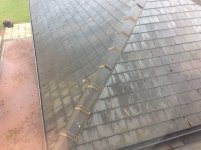
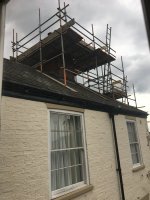
We have a Georgian house grade 2 listed, our understanding is that to use modern mortar causes a lot of problems down the road this is the second time this Roof has been pointed as you can see it’s just not sticking.
But this isn’t actually what I’m asking about, we have just had all the scaffolding put up to replace four chimney pots and the flaunching, I don’t want to waste a lot of money by having to have the scaffolding put up again in six months, shall we use modern mortar? The builder (also a friend) we always use is confident that it will be ok.
Thanks Ian
 

Attachments

  • E2858485-0465-40B1-9178-FD65F612E84A.jpeg
    E2858485-0465-40B1-9178-FD65F612E84A.jpeg
    198.5 KB · Views: 14
  • 3CD3992F-4CD2-4F68-B27C-B9F65A7225C1.jpeg
    3CD3992F-4CD2-4F68-B27C-B9F65A7225C1.jpeg
    187.6 KB · Views: 14
I'm not sure why the lime mortar isn't sticking, or at least, isn't enduring. Was it strong enough? Did they not use sharp sand?

If you are going to use a Portland cement, I suggest a 4:1:1 mix of sand, white cement and hydraulic lime. Ridges and hips are about the only place I can think of where a mix stronger than 6:1 is appropriate. If you were to use a grey cement, you might risk a visit from the Listed Buildings people, but white cement gives makes a good lime-mortar immitation. As for the flaunching I would be using a white cement and sharp sand mix myself. Throw in some chopped strands of fibreglass if you have any.
 
I'm not sure why the lime mortar isn't sticking, or at least, isn't enduring. Was it strong enough? Did they not use sharp sand?

If you are going to use a Portland cement, I suggest a 4:1:1 mix of sand, white cement and hydraulic lime. Ridges and hips are about the only place I can think of where a mix stronger than 6:1 is appropriate. If you were to use a grey cement, you might risk a visit from the Listed Buildings people, but white cement gives makes a good lime-mortar immitation. As for the flaunching I would be using a white cement and sharp sand mix myself. Throw in some chopped strands of fibreglass if you have any.
And if you don't have any odd bits of fibreglass then attack the hair of the nearest goat! Just thrown a sack away otherwise you could have had it.
 
before going ahead I'd recommend reading nigel copsey's book on hot lime and traditional mortars, very good read, it's worth every penny and more. I think it was mike here that recommended it a while ago.
 
Last edited:
If you were to use a grey cement, you might risk a visit from the Listed Buildings people, but white cement gives makes a good lime-mortar immitation. As for the flaunching I would be using a white cement and sharp sand mix myself. Throw in some chopped strands of fibreglass if you have any.
We may have just been lucky but used grey cement (std Blue Circle), soft sand and hydrated lime, tons of the stuff when rebuilding / converting a grade 2 listed sandstone stable block as well as the walled garden. The planners were perfectly happy and they had been a real pita on that build with other issues. We had discussed the mix and confirmed it in writing so I guess it's down to the local guys.
That was at least 13 or 14 years ago and when I visited before Christmas last year it was still in excellent condition.
 
Brill thanks Mike, I have yet to ask what he used last time, this gives me a good insight and starting point.
Thank you all there’s some good info to talk to my builder with. I just hope it all works out this time.
Cheers Ian
 
Brill thanks Mike, I have yet to ask what he used last time, this gives me a good insight and starting point.
Thank you all there’s some good info to talk to my builder with. I just hope it all works out this time.
Cheers Ian
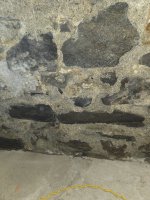
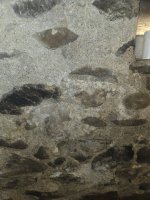
Ian, over state side, did they use a lime mortar for stone rubble foundations circa late 1800's to early 1900's? Reason I am asking our house has such a foundation roughly 3' in depth and I would like to stain, paint or whitewash it but I am hesitant. This would be the inside only.
 
this might be useful to you
Great, thanks for that. Will dig into it soon, away at the mo.
@duke really don’t know I’m afraid, but I would suggest you don’t try and cover it with anything that will prevent it breathing. Probably Limewash would be suitable but outdoors I don’t know.
Ian
 
Ian, over state side, did they use a lime mortar for stone rubble foundations circa late 1800's to early 1900's? Reason I am asking our house has such a foundation roughly 3' in depth and I would like to stain, paint or whitewash it but I am hesitant. This would be the inside only.
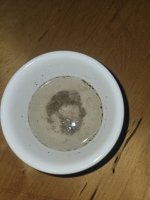
Get a small sample of the mortar and drop it in some vinegar. If it efferevesces then it's lime.
 
That's cement-based mortar. The grey tint is the give-away, and confirms the result of the vinegar test.
 
Lime related Tangent: Fun story (well I think so). I was applying lime plaster to the inside of my dining room a couple years back - using my standard Wickes Hawk and trowel.
It was quiet, and I started to hear what sounded like radio static. I wasn't imagining it. I'd hear it, put down my hawk and trowel, and go searching for the noise... But I couldn't find it. I'd go back to my tools, and suddenly - I could hear it again! Tools down, go search for the noise. Can't find it. And back to the plastering I would go. This happened three times, until I called a family member to come downstairs and confirm I wasn't going crazy. They said - "it's you!" - I said it's not me, I can definitely hear something and I'm not imagining it!
"No"... they said "It's coming from you..."
I was confused. I looked around, and paid attention... the aluminium hawk was reacting with the lime plaster and fizzing... which is what I could hear, and why I couldn't find it when I put my tools down and went searching.

Fun times.
:)
 
Back
Top