HOJ
Sapling
Another example, not stolen off the internet!


HOJ":39yjnc5d said:Another example, not stolen off the internet!

HOJ":3tqu583v said:Another example, not stolen off the internet!
Agreed, just wanted to show off :eusa-whistle:Trevanion":32crtb9p said:It's more straightforward when the staircase is a cut-string staircase like yours,
The odd one is a newel post which in this case gives the handrail more structure especially as there is a tendency to use it as leverage to take the first steps.Andyp":32crtb9p said:Can I ask though why one of those spindles is so different to the rest?


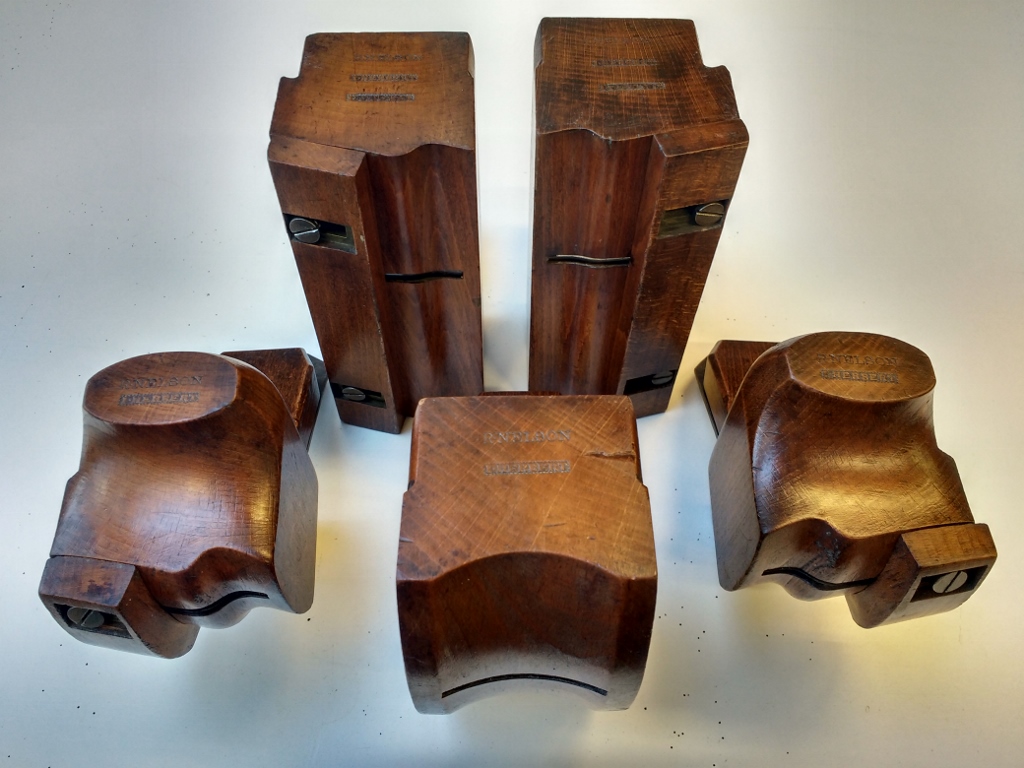
Mike G":33zzfgg5 said:I'm sure that in a modern workshop set up for doing this sort of thing, all the curves are worked out in 3 dimensions in advance of using a single tool. I'm also certain that 100 years ago this would have been done with a whittling-down-and-fairing approach.



TrimTheKing":18mgxaoi said:Turn, or have turned, a slightly longer spindle(s) for that area. Path of least resistance!
Cabinetman":1jnwc4bz said:I see your problem Roger, I’m afraid the only thing I can think of, probably isn’t what you want to hear, how about turning up a large biscuit tin to sit on the bottom step out of the top of which come the spindles. This would give you the height you require hopefully, not ideal but it would work. Ian


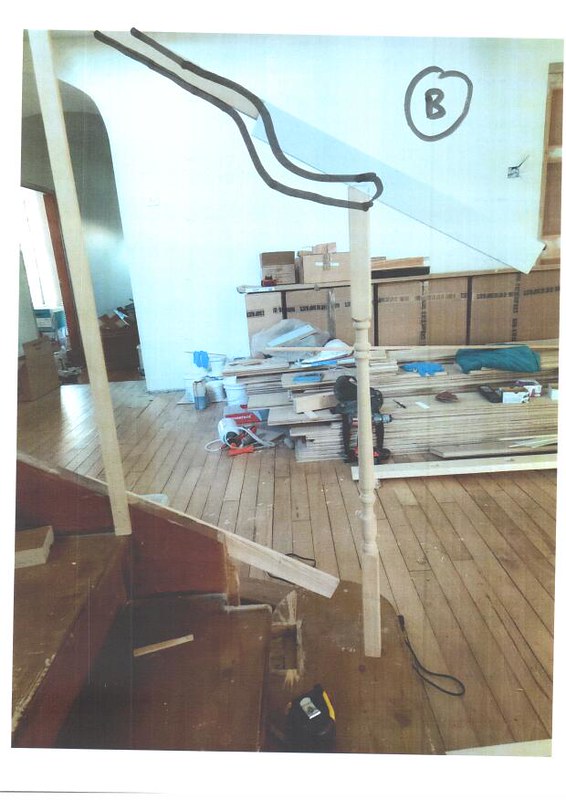
TrimTheKing":2swe7pci said:Can you not just do option B but not start the flat section until the rail hits that spindle? Surely the rail could hit that spindle on the straight then immediately turn into the volute?
Malc2098":3evtpem0 said:Would it be possible to lower the handrail on the lower section so you could place the first bottom tread spindle closer to the riser? I've no idea how much you would have to lower it it, but could it be done?
RogerS":2baezls6 said:TrimTheKing":2baezls6 said:Can you not just do option B but not start the flat section until the rail hits that spindle? Surely the rail could hit that spindle on the straight then immediately turn into the volute?
That might just work :eusa-think:
RogerS":lg4qmh4r said:Malc2098":lg4qmh4r said:Would it be possible to lower the handrail on the lower section so you could place the first bottom tread spindle closer to the riser? I've no idea how much you would have to lower it it, but could it be done?
That sounds like Option B, Malc.
TrimTheKing":d4n9nkg2 said:Can you not just do option B but not start the flat section until the rail hits that spindle? Surely the rail could hit that spindle on the straight then immediately turn into the volute?
Mike G":1y7egvfn said:TrimTheKing":1y7egvfn said:Can you not just do option B but not start the flat section until the rail hits that spindle? Surely the rail could hit that spindle on the straight then immediately turn into the volute?
Well, once the rail line has hit the spindle there would be no need for the handrail to step down. So you have the right answer, I reckon, but applied to the wrong option. I'd say option A then level out......exactly as HOJ describes.
HOJ":2s40i4uv said:If some one has a copy of George Ellis's book Modern practical stair building & hand railing, there is a picture on page 2 (plate 3) of a handrail with volute, which may help, I cant copy it.
On the basis the volute travels round to match the bottom step, you can start to rise the handrail on the turn of the sweep, difficult to describe.


